
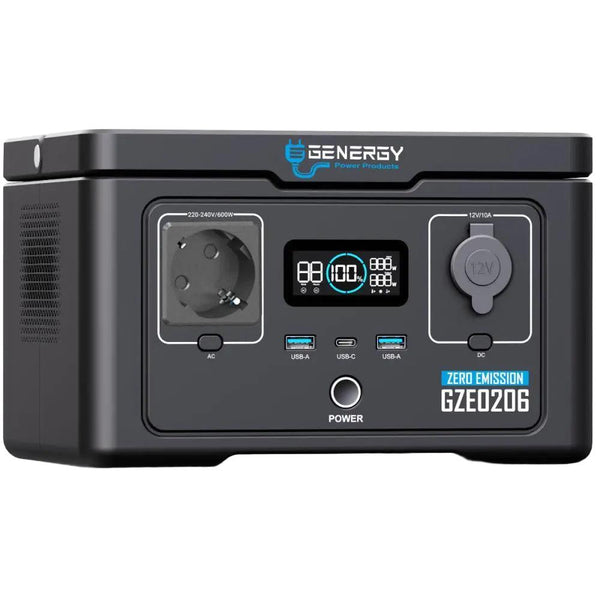
Portable Power Stations
Not sure?Try the Generator AdvisorAll products
-
-
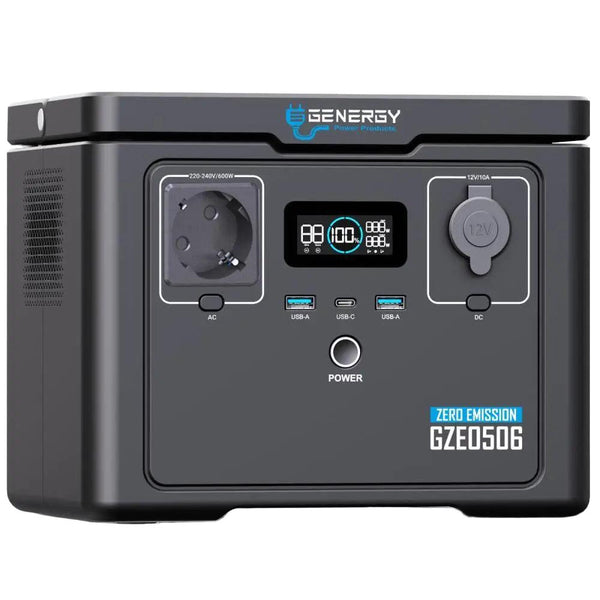
GENERGY GZE-0506 Portable Power Station 600 W and 512 Wh
-
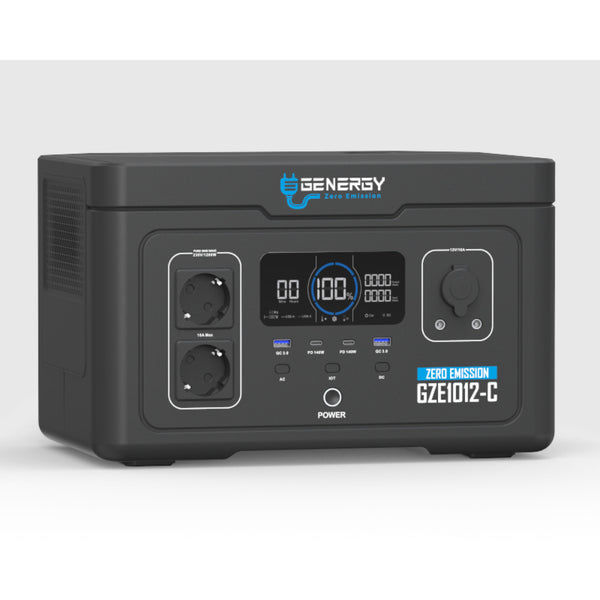
992 Wh Portable Power Station GENERGY GZE-1012-C – 3,600 W Max. Output
-
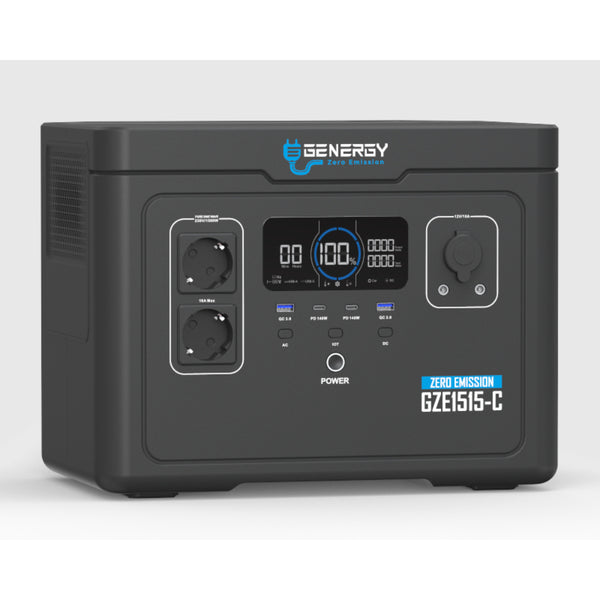
1488 Wh Portable Power Station GENERGY GZE-1515-C – 3,600 W Max. Output
-
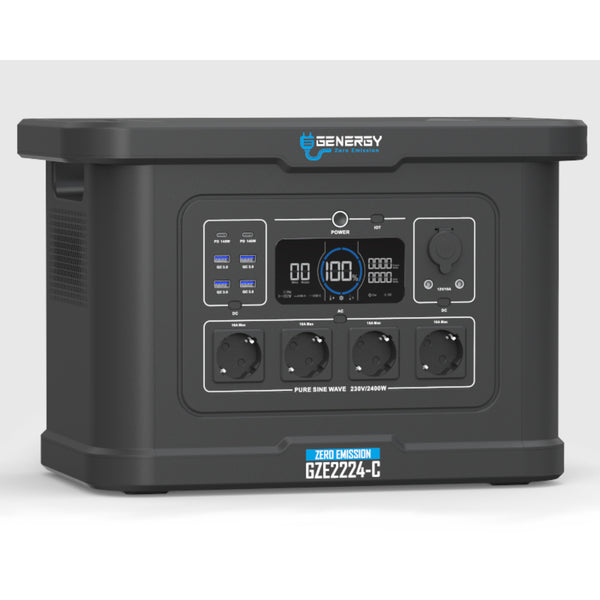
2232 Wh Portable Power Station GENERGY GZE-2224-C – 4,500 W Max. Output
-
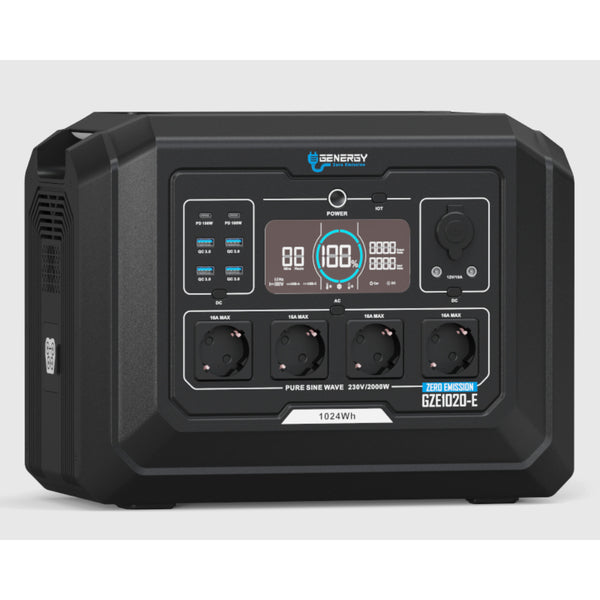
1024 Wh Portable Power Station GENERGY GZE-1020-E – 4,500 W Max. Output
-
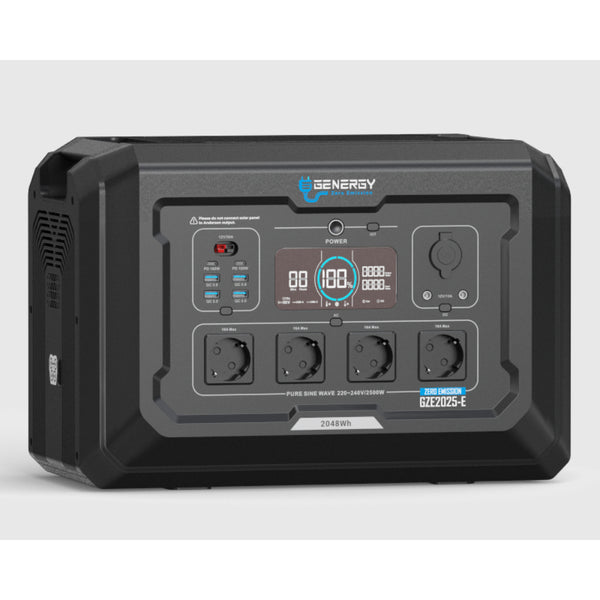
2048 Wh Portable Power Station GENERGY GZE-2025-E – 5,400 W Max. Output
-
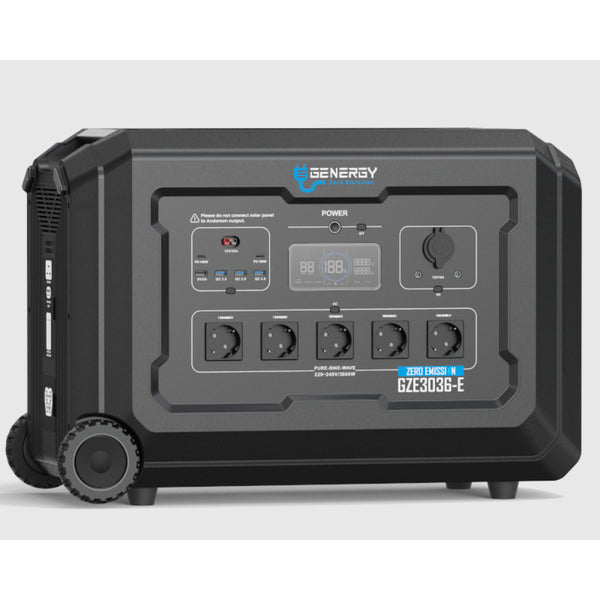
3072 Wh Portable Power Station GENERGY GZE-3036-E – 7,000 W Max. Output
-
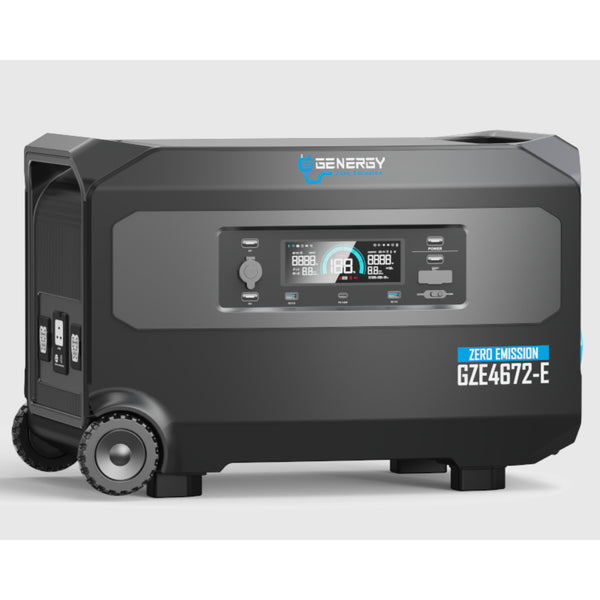
4608 Wh Portable Power Station GENERGY GZE4672-E – 9,000 W Max. Output
-
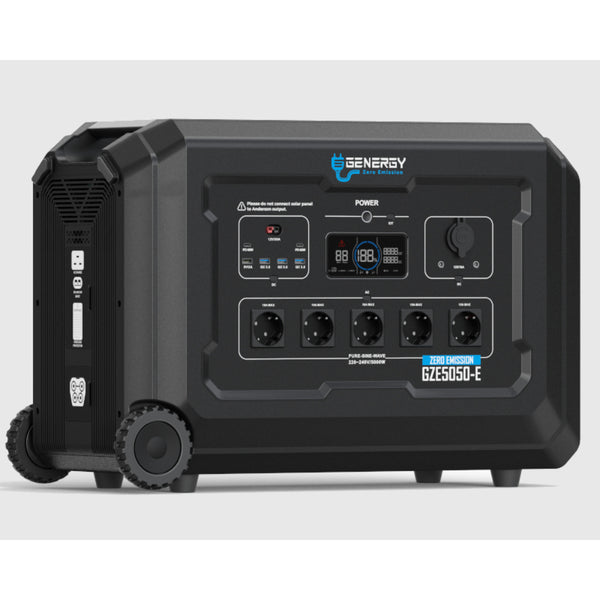
5040 Wh Portable Power Station GENERGY GZE-5050-E – 7,000 W Max. Output
-
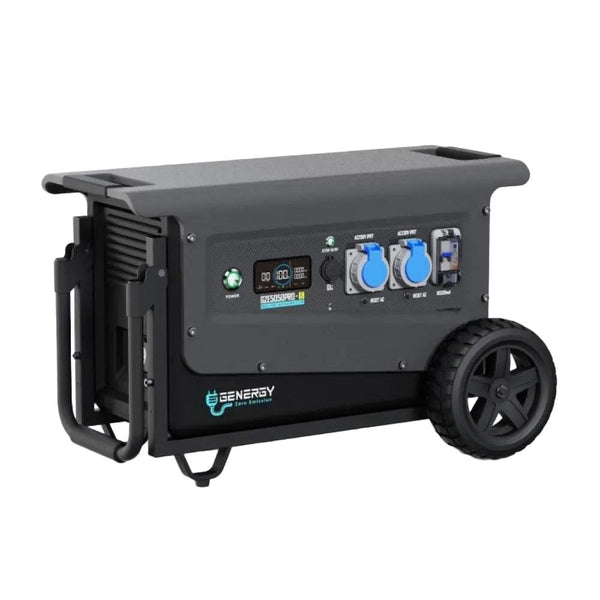
3072Wh Portable Power Station GENERGY GZE3036PRO – 3,600 W Rated, 7,000 W Peak
-
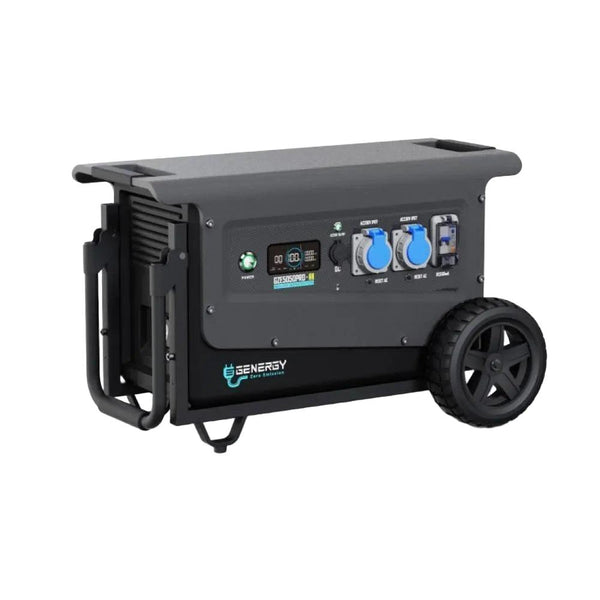
GENERGY GZE5050PRO Portable Power Station 5040 Wh, 7000 W Output
-
Try the Generator Advisor
Not sure? We're here to help.
Our digital Generator Advisor finds the right generator for your needs in 60 seconds.
Buying guide: Portable Power Stations
With a modern portable power station you always have a quiet, emission-free power source that is ready to go – whether for camping, your motorhome, as a buffer for balcony solar, for backup power or as a mobile workstation. At Kipor.org you will find portable power stations with modern LiFePO4 battery technology, pure sine wave output and solar charging – featuring our core brand Genergy, for which we are the exclusive distributor in Germany, Austria and Switzerland (DACH).
LiFePO4 battery technology – over 4,000 charge cycles, far longer than standard lithium
Pure sine wave – safe for laptops, TVs, CPAP machines, drones and all sensitive electronics
Solar charging with MPPT – emission-free charging, even off-grid
Versatile outputs – 230 V Schuko, USB-C PD, USB-A QC 3.0 and DC for all your devices
Silent & emission-free – ideal indoors, in residential areas, for camping and at events
Personal advice on the right size – free of charge on +49 (0) 5423 477400 or online 24/7
Buy a Portable Power Station – Mobile Power for Camping, Backup and Balcony Solar
Portable power stations are lithium battery packs with a built-in inverter – compact, quiet, emission-free and ready to use at any time. They provide mains power wherever there is no socket: at the campsite, in your motorhome, in the garden, with your balcony solar system, on the building site, during a power cut or in your service van.
At Kipor.org you will find power stations in every relevant size class – from a compact 256 Wh companion for camping and outdoor use to a powerful home backup solution. The focus of our range is the Spanish brand Genergy, for which we are the exclusive distributor in the DACH region.
Honest Advice: Understanding Wh, Watts and Peak Power
Three figures are particularly prone to creative marketing in the power station industry – and in all three cases it is important to interpret them correctly:
1. Capacity (Wh) vs. output (W): These two values are often confused. The capacity in watt-hours (Wh) tells you how long you can draw power – the output in watts (W) tells you how much at once. A 1,000 Wh power station with 600 W can, for example, run a 100 W laptop for around 10 hours, but a 600 W kettle for only 1.5 hours – and a 1,500 W hairdryer not at all.
2. Continuous power vs. peak power: Many manufacturers advertise the peak power (“1,200 W max.”), which can only be held for seconds, for example to cover a device’s starting current. What counts for sizing, however, is the continuous power – the output the power station can deliver for hours. Always look at the continuous rating.
3. Pure sine wave vs. modified sine wave: Cheap power stations often deliver a modified sine wave – fine for fan heaters and light bulbs, but it can damage sensitive electronics (laptops, drones, CPAP machines, medical devices). At Kipor.org we only stock power stations with a true pure sine wave.
LiFePO4 vs. Lithium-Ion – Why Battery Chemistry Matters
Power stations use two different lithium battery chemistries that perform very differently in practice:
Lithium-ion (NMC/LCO): The older technology, still found in many budget power stations. Typically 500–800 charge cycles down to 80% remaining capacity – noticeably worn after around 2–3 years of regular use. Higher energy density (lighter), but a shorter service life and a higher risk if damaged.
LiFePO4 (lithium iron phosphate): The modern, clearly superior technology. Over 4,000 charge cycles with more than 70% remaining capacity – that is more than 10 years of everyday use. Much safer, more thermally stable and longer-lasting. Slightly heavier per Wh, but unbeatable in service life and safety.
At Kipor.org we tell you the truth: if you want a power station that lasts more than a few years, LiFePO4 is the only sensible choice. Our Genergy power stations use LiFePO4 throughout – buy once and use your power station for ten years and more.
When a Portable Power Station Is the Right Choice
Camping, outdoors & motorhomes: Silent power for your cool box, lighting, smartphone, laptop, coffee machine and CPAP machine – without generator noise or exhaust fumes.
Balcony solar buffer: Store the solar power you generate during the day and use it in the evening, when household consumption is at its highest.
Backup power & blackout preparedness: Keep your most important devices running during a power cut – router, fridge, lighting, heating controls, medical equipment – without having to start a combustion generator.
Mobile workstations & events: Power for laptops, photo and video equipment, market stalls, food truck backup, mobile DJ and PA systems.
Service vans & trades: Quiet power for power tools and battery chargers in your service vehicle, without leaving the engine running.
Power Station or Generator – Which Suits Which Job?
Power stations and generators complement each other, but neither fully replaces the other.
Power stations are ideal for short to medium-length use with moderate power demand (typically up to 3,000 W continuous) and in situations where noise and exhaust fumes are not acceptable. They are ready to use instantly, maintenance-free and need no fuel supply.
Generators are the right choice when high continuous loads are needed for many hours or days – e.g. backup power for a heat pump in winter, continuous site power or home backup over several days. With a fuel reserve, the runtime is practically unlimited.
The best combination for backup power: a power station as quiet first-line supply for the first few hours – plus a diesel inverter generator with ATS for longer supply during an extended power cut. We will be happy to advise you on the right hybrid solution.
Solar Charging – Making the Most of MPPT
Modern power stations charge not only from the mains but also from solar panels. This requires a built-in MPPT charge controller (Maximum Power Point Tracking), which makes optimal use of the panel’s energy yield at all times.
Depending on the model, Genergy power stations feature MPPT inputs with different power ranges – combinable with foldable solar panels for mobile use or fixed PV modules on your motorhome, garden shed or as a balcony solar buffer.
Important: check the permitted voltage and current range of your power station’s solar input – not every panel is compatible with every unit. We will help you choose the right one.
Genergy – Our Core Brand for Portable Power Stations
Kipor.org is the exclusive DACH distribution partner for Genergy – a Spanish manufacturer that, alongside classic generators, has consistently specialised in modern energy storage and solar technology.
In the power station segment, the Genergy range includes:
Compact outdoor power stations (e.g. the GZE series) from 256 Wh up to several kWh – ideal for camping, motorhomes and mobile use. All models with LiFePO4 battery, pure sine wave and MPPT solar input.
Stationary storage and hybrid systems – such as the Solar Plan Sirius range with off-grid inverters from 5.2 kW to 8 kW, LFP battery storage from 10 kWh to 20 kWh and complete PV packages for a self-sufficient energy supply for homes, farms or remote sites.
We technically inspect every model, supply it with German operating instructions and ensure it is suited to the European market.
Sizing: What Size of Power Station Do You Really Need?
The right size depends on what you want to power and for how long:
200–500 Wh: Smartphone, laptop, LED lighting, small cool box – ideal for weekend camping, a day’s fishing, a mobile workstation or an outdoor photo trip.
500–1,500 Wh: Several devices at once, a longer weekend, a motorhome companion, a small balcony solar buffer.
1,500–3,000 Wh: Backup power for a fridge over several hours, heat pump controls during a blackout, food truck backup, a service van for all-day use.
3,000+ Wh: Home backup buffer, off-grid supply, stationary storage systems – this is where you quickly enter the range of the Genergy Solar Plan Sirius systems.
We will help you with the specific sizing – simply tell us which devices you want to power and your typical runtime, and we will recommend the right size.
Free Advice – in Person or Online Around the Clock
Not sure which power station size is right for your application, or whether a hybrid setup of power station and diesel inverter generator would better suit your home backup needs? Our technical team will advise you free of charge and independently of any manufacturer on +49 (0) 5423 477400.
Outside our business hours, our free online advice tool is available 24 hours a day, 7 days a week. We deliver throughout the EU.
Why choose an inverter generator?
-
Clean sine wave
Conventional generators fluctuate. Inverters clean up the power digitally – your laptop and phone will thank you.
-
Whisper mode
Enclosed housings and eco mode make them up to 30% quieter than conventional generators.
-
Fuel saver
The engine only revs as high as it needs to. Need just 100 W? It simply ticks over at idle.
Harmonic distortion
< 2.5%
Safe for laptops & IT equipment
Noise level
~ 54 dB
Quieter than a conversation
Availability
98% in stock
Order today, ready to ship tomorrow
 Knetterhauser Straße 26
