
50 kVA Standby Generator FME SimpleGen Y50S5 – Euro Stage V Diesel Generator
Electric start
Start type

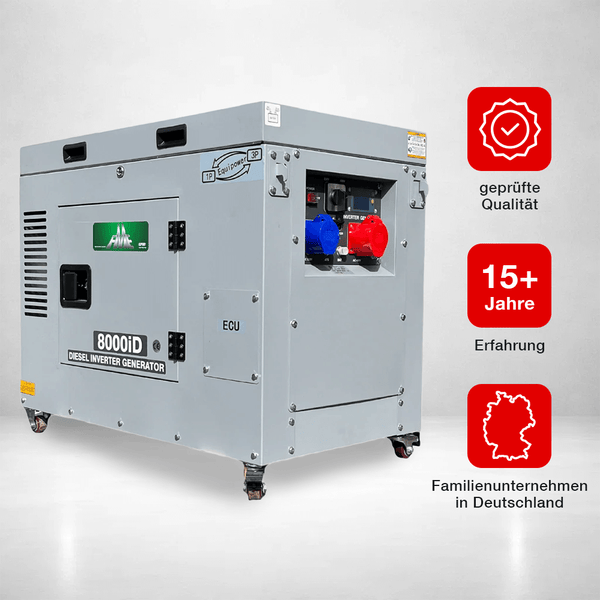 Also runs on HVO100 and heating oil
Our digital Generator Advisor finds the right generator for your needs in 60 seconds.
On an equestrian yard, far more depends on electricity than most owners notice day to day. Water troughs are kept frost-free electrically in winter, large stables rely on forced ventilation, the climate in stalls housing a sick horse or a heavily pregnant mare is controlled electronically, and the hay drying system must not fail during harvest, otherwise tonnes of hay will turn mouldy. Then there are horse solariums, wash bays with hot water boilers, arena lighting, tack room heating and, on many yards these days, charging solutions for electric yard loaders and electric pick-ups. All of this depends on the mains supply – and is therefore exposed to the risk of a power cut.
Animal Welfare, Not Just Convenience
Unlike in a house, a prolonged power cut in a stable is not about a loss of comfort but about animal health. Frozen water troughs, failed ventilation in closed stables, no emergency lighting during a foaling or a colic case – these are real risks that, if the worst happens, are also assessed under animal welfare law. Under Section 2 of the German Animal Welfare Act (Tierschutzgesetz), keepers are obliged to ensure appropriate care. A reliable backup power supply is part of these duties.
Which Generator Output Suits Which Size of Yard?
The rule of thumb: 1 to 1.5 kW of backup power reserve per horse on a livery yard, plus a flat 3 to 5 kW for arena lighting and yard infrastructure. A small yard with three horses gets by with 5 to 8 kW, a livery stable with 15 horses needs 10 to 15 kW, and a competition or breeding yard with 30 horses and full equipment needs 25 to 50 kVA. If you run a hay drying system, its peak load should be calculated separately – this often moves you into the three-phase class from 11 kVA. Arena lighting today is mostly LED-based and therefore relatively economical, but causes load spikes when switched on.
Inverter, Synchronous or Standby Power System?
Modern stable infrastructure includes electronically controlled components: stable climate controllers, ventilation sensors, solarium electronics, stable cameras and hay drying controls. These devices rely on clean sine wave power – inverter generators with harmonic distortion below three per cent are the right choice here. Conventional AVR synchronous generators are cheaper to buy but come with a less clean sine wave that puts long-term strain on electronic controls. For permanent installation in a separate generator room or container, standby power systems with a soundproof enclosure and integrated controller are the professional solution – including an automatic weekly self-test that checks the generator really starts.
Diesel Is the Obvious Choice
Practically every equestrian yard run on agricultural lines already has diesel in the tank – for the tractor, the yard loader and the muck spreader. A diesel generator therefore fits into your existing fuel logistics, is much more economical than petrol in continuous operation, and the fuel remains stable for months. For very small hobby yards without their own diesel supply, a petrol or dual fuel generator can also make sense.
ATS Connection for Unattended Stable Operation
At most riding stables, nobody is on site at night or at weekends – which is exactly when most power cuts happen. A generator with an ATS (automatic transfer switch) starts automatically when the mains fails and takes over the supply within a few seconds, without anyone having to drive to the yard. When mains power returns, it switches back just as automatically and cools down in a controlled way. The connection is made by a licensed electrician in accordance with VDE-AR-N 4105.
Advice Tailored to Your Yard
Which generator suits your yard does not depend on your mains supply rating alone, but on your equipment list, the number of horses, any hay drying system and your expansion plans. Send us a short overview of the equipment to be backed up and the number of stalls – we will size the right generator, calculate runtime per tank and service intervals, and give you a complete quotation that your electrician can implement directly.
Conventional generators fluctuate. Inverters clean up the power digitally – your laptop and phone will thank you.
Enclosed housings and eco mode make them up to 30% quieter than conventional generators.
The engine only revs as high as it needs to. Need just 100 W? It simply ticks over at idle.
Safe for laptops & IT equipment
Quieter than a conversation
Order today, ready to ship tomorrow


 Knetterhauser Straße 26