Generators for Heat Pumps
Not sure?Try the Generator AdvisorAll products
-
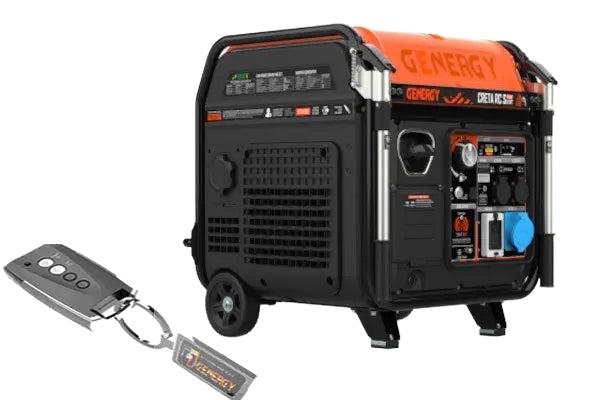
66 dB(A) Whisper-quiet7.5 kW Max. output26 L Tank capacityElectric star… Start type -

7500 W Petrol Inverter Generator with Remote Control Genergy Creta RC Silent
61 dB(A) Whisper-quiet7.5 kW Max. output26 L Tank capacityElectric star… Start type -

9200 W Petrol SVR Generator 230/400V GENERGY Somport-S IP67
74 dB(A) Whisper-quiet8.3 kW Max. output50.0 L Tank capacityElectric start Start type -

11,000 W Petrol SVR Generator 230/400 V GENERGY Cervascan-S IP67
74 dB(A) Whisper-quiet11.0 kW Max. output50 L Tank capacityElectric start Start type -

18 kW (22.5 kVA) Petrol Generator Genergy STELVIO S – IP67
68 dB(A) Whisper-quiet6.0 kW Max. output50.0 L Tank capacityElectric start Start type -

15 kW (18.5 kVA) Petrol Generator 400 V GENERGY IZOARD S
68 dB(A) Whisper-quiet5.0 kW Max. output50 L Tank capacityElectric start Start type -

5500 W Dual Fuel SVR Generator Genergy Natura 6000 – Petrol & LPG
67 dB(A) Whisper-quiet5.5 kW Max. output28 L Tank capacityRecoil start;… Start type -

8500 W Dual Fuel SVR Generator Genergy Natura 8000 – Petrol & LPG
68 dB(A) Whisper-quiet8.5 kW Max. output28 L Tank capacityRecoil start;… Start type -

10.6 kVA Petrol AVR Generator DeWalt DXGNP853E 230 V & 400 V
90 dB(A) Whisper-quiet7.6 kW Max. output28 L Tank capacityRecoil start;… Start type -

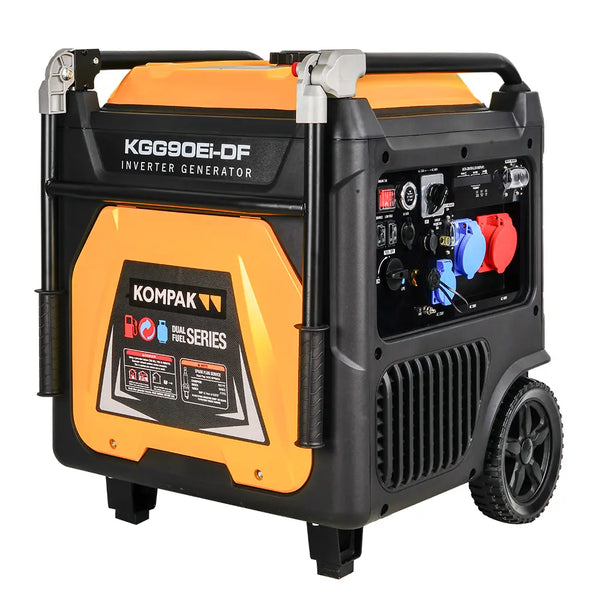
11 kVA 400 V LPG & Petrol Inverter Generator Kompak KGG90Ei-DF
75 dB(A) Whisper-quiet8.9 kW Max. outputRecoil start;… Start type -

7.5 kVA Multi-Fuel Generator ATG Multifuel 8TPA with ATS – Diesel, Heating Oil, Vegetable Oil & Used Cooking Oil
75 dB(A) Whisper-quiet2 kW Max. output14 L Tank capacityElectric start Start type -

15 kVA Petrol Backup Generator CGM Dual 15000 SP
-
Try the Generator Advisor
Not sure? We're here to help.
Our digital Generator Advisor finds the right generator for your needs in 60 seconds.
Buying guide: Generators for Heat Pumps
Generators for Heat Pumps – Clean Power That Won't Damage Your Heating
Heat pumps are electrically more sensitive than any conventional oil or gas boiler. At the heart of every modern heat pump is the inverter compressor, whose frequency converter regulates speed and output continuously. This electronics needs a pure, stable sine wave with low harmonic distortion – otherwise it suffers damage over weeks and months that only becomes apparent long after the warranty has expired. That is exactly why not every generator is suitable for a heat pump, even if the wattage looks right at first glance.
What Requirements Must the Generator Meet?
Three criteria determine suitability. First, power quality: inverter generators deliver an almost lab-grade sine wave with harmonic distortion below three per cent – ideal for frequency converters and control electronics. Conventional AVR synchronous generators are at eight to twelve per cent, which puts long-term strain on inverter heat pumps. Second, starting reserve: on start-up, a heat pump draws three to five times its rated power. A 3 kW heat pump therefore briefly needs up to 15 kW of peak power – the generator must handle this load spike without a voltage dip. Third, voltage type: modern outdoor units are almost always three-phase (400 V). A generator without a three-phase CEE outlet is of little use to you.
How Much Power Do You Really Need?
What matters is not the heat pump's heating output but its electrical power consumption plus starting current. A typical data sheet value of 2.5 kW rated electrical power for a detached house means 7 to 12 kW on start-up. On top of that comes the immersion heater used as a backup heating element, which draws a further 6 to 9 kW depending on the configuration – if it runs at the same time. For an average detached house with an inverter heat pump, 8 to 10 kW of generator output at 230 V plus 400 V is the right choice. With an active immersion heater or larger systems, we recommend 12 to 20 kW.
Diesel or Petrol?
For heat pump backup power, diesel is clearly the better choice. First, because of storage stability: heating oil and diesel can be stored for years, whereas petrol loses ignition quality after 6 to 12 months. Second, because of efficiency: in continuous operation over several hours, diesel has a much lower specific fuel consumption – during a two-day winter blackout you will notice the difference in the tank. Third, because of safety: refuelling the generator with heating oil is far less problematic than storing larger quantities of petrol in the boiler room.
Connection by an Electrician, Not a DIY Job
The heat pump is part of your home's electrical installation. A backup generator must be connected by a licensed electrician in accordance with VDE-AR-N 4105 – they install the changeover switch with backfeed protection, link the ATS input to the main distribution board and register the system with the grid operator. We supply the generator together with all data sheets, wiring diagrams and certificates your electrician needs for the registration.
Expert Advice Instead of a Bad Buy
Which generator really suits your heat pump depends on the model, wiring and home installation. Send us your heat pump's data sheet and a short note on the immersion heater, PV system and building size – we will size the right generator, calculate the fuel reserve you need and give you a complete quotation that your electrician can implement directly.
Why choose an inverter generator?
-
Clean sine wave
Conventional generators fluctuate. Inverters clean up the power digitally – your laptop and phone will thank you.
-
Whisper mode
Enclosed housings and eco mode make them up to 30% quieter than conventional generators.
-
Fuel saver
The engine only revs as high as it needs to. Need just 100 W? It simply ticks over at idle.
Safe for laptops & IT equipment
Quieter than a conversation
Order today, ready to ship tomorrow


Knetterhauser Straße 26