
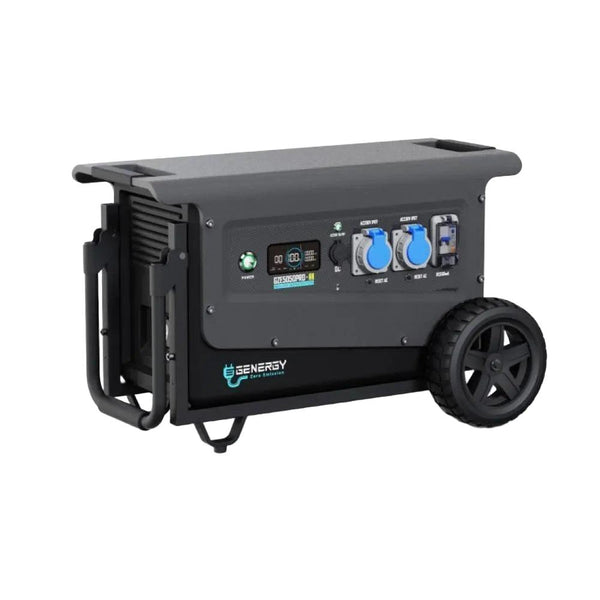
Generators for Film Production & Photography
Not sure?Try the Generator AdvisorAll products
-
-
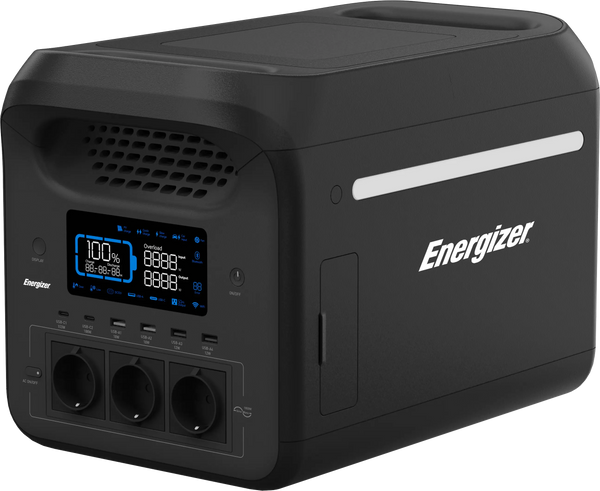
Energizer Peak 1800 Portable Power Station 3000 W – 1229 Wh LiFePO₄
-
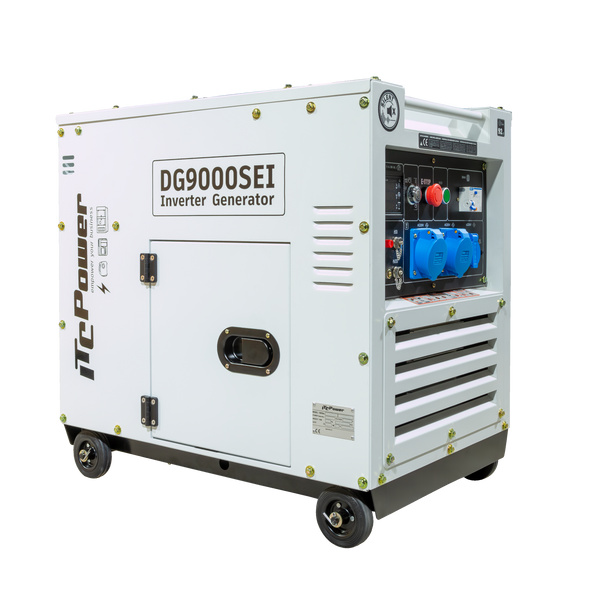
6500 W Diesel Inverter Generator ITC DG9000SEi
-
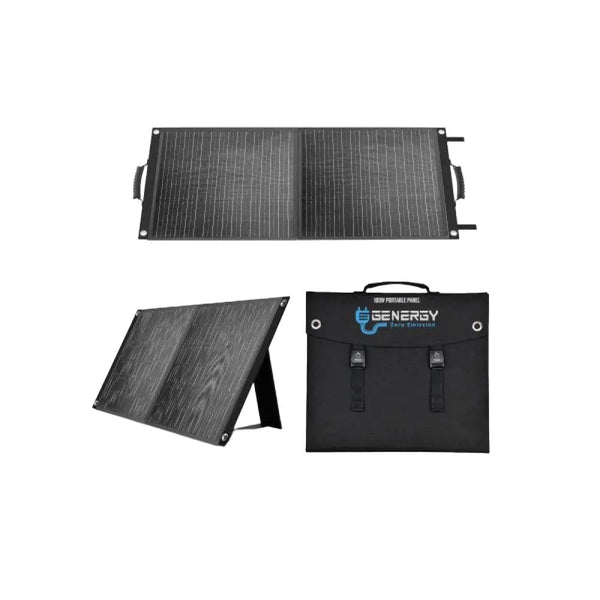
Foldable Monocrystalline Solar Panel 100 W Genergy GZE100
-
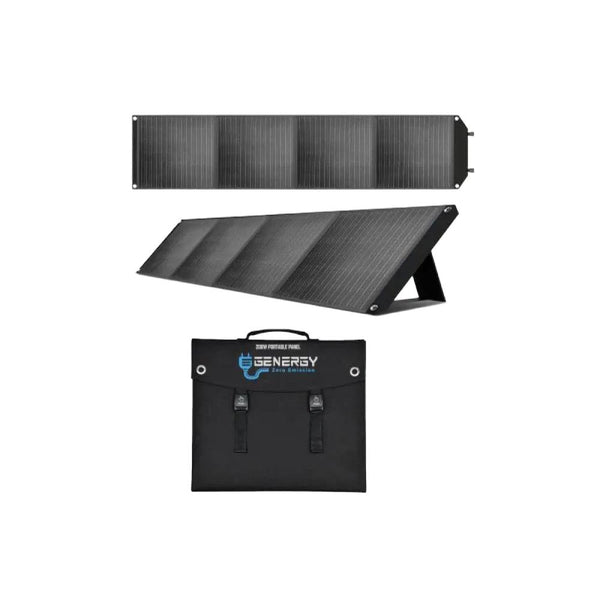
Foldable Monocrystalline Solar Panel 200 W Genergy GZE200
-
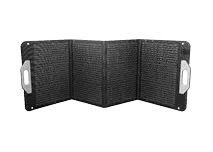
Energizer Sunpack 100 Foldable Solar Panel 100 W for Portable Power Stations
-
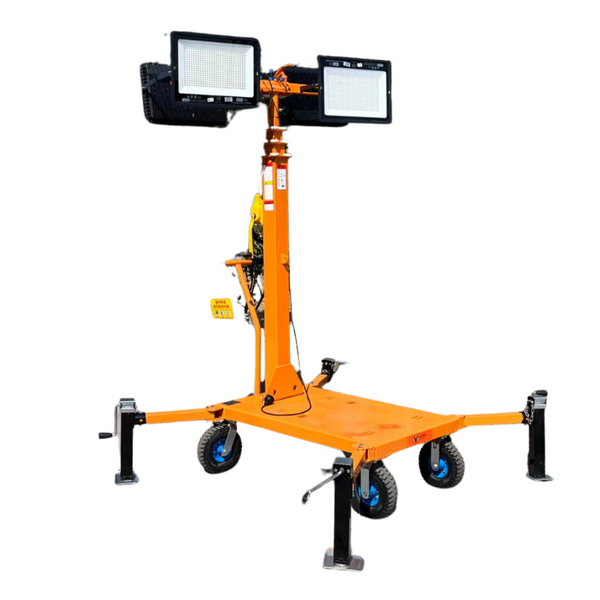
LED Lighting Tower – 4x400 W – 160,000 Lumens Voltherr LT1800
-
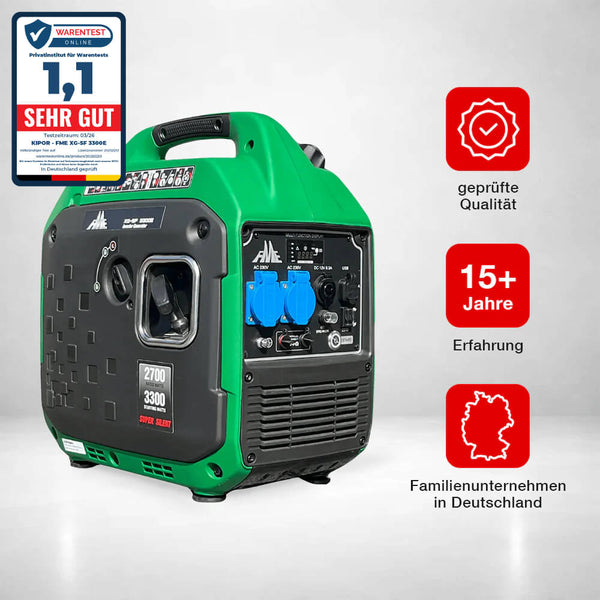
3300 W Petrol Inverter Generator with Electric Start, only 21.4 kg – FME XG-SF 3300E
2.9 kW Max. output5.8 L Tank capacityRecoil start;… Start type -
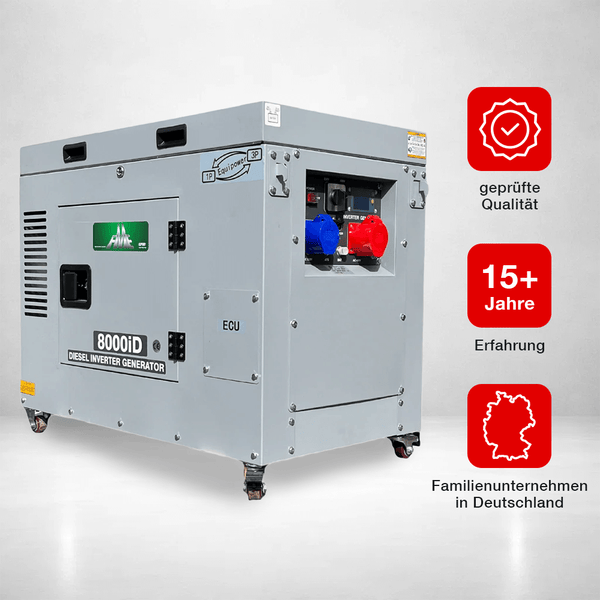 Also runs on HVO100 and heating oil
8000 W Diesel Inverter Generator FME 8000iD 230V & 400V with Integrated ATS Input (Pre-order now)
8.0 kW Max. output15 L Tank capacityElectric start Start type -
Try the Generator Advisor
Not sure? We're here to help.
Our digital Generator Advisor finds the right generator for your needs in 60 seconds.
Buying guide: Generators for Film Production & Photography
Generators for Film Production and Photography – Why Power Quality Shows Up on Screen
Anyone who has sat in the edit suite looking at footage in which the LED light flickers bright-dark-bright every few seconds, or a Skytrans wall drags visible stripes across the frame, knows the problem: banding and flicker are almost always caused by an unstable power supply – and that happens surprisingly often when a cheap AVR generator has been brought onto set. The issue is not the wattage, but the power quality behind it.
Three Requirements a Film-Ready Generator Must Meet
First: a pure sine wave with harmonic distortion below three per cent. Inverter generators produce power in two stages: the combustion engine delivers a DC voltage, which is electronically converted into a clean 50 Hz sine wave. AVR synchronous generators typically run at eight to twelve per cent harmonic distortion – fine for a drill, but visible in the LED spectrum at sensor level. Second: precise frequency stability. If the generator fluctuates by just one or two hertz, the light frequency falls out of sync with the camera's shutter speed – the result is banding. Third: a low noise level. A generator that can be heard on the location sound makes recordings unusable or forces the sound department into post-production clean-up that costs time and money.
Portable Power Stations – the Premium Choice for Quiet Sets
Battery-powered portable power stations with a pure sine wave are the professional solution for anything recorded with live sound: dialogue scenes, interview setups, documentary shoots in private settings and photo sessions at noise-sensitive locations. They silently deliver two to five kilowatts of continuous power, can be recharged during the day via solar panels or a remote diesel inverter, and completely replace conventional generators on 70 per cent of all small to medium-sized sets. For longer shoots or higher loads, they can be expanded into hybrid setups: the power station on set, the generator 30 metres away behind a sound barrier for recharging.
When Diesel Inverter, When Petrol?
For one-day shoots of under six hours with moderate loads, a petrol inverter is economically viable – compact, light and inexpensive to buy. As soon as the shooting day extends to 10 or 12 hours or the continuous load exceeds 4 kilowatts, diesel is clearly the superior solution: higher efficiency at full load, longer storage stability (petrol loses ignition quality after 6 months), and the fuel can be drawn from the crew bus or production truck. On top of that, diesel generators are quieter at full load – paradoxical but true: diesel inverters in a soundproof enclosure are often quieter than petrol models.
HMI, LED, Tungsten – Different Requirements
LED panels are the most widely used type of lighting today and are particularly sensitive to power quality. HMI lamps come with high inrush currents (the ballast briefly draws 1.8 to 2 times the rated current on ignition), but cope well with moderate frequency fluctuations. Conventional halogen and tungsten lamps are technically uncritical but draw a lot of continuous current. For mixed lighting concepts with LED and HMI, an inverter generator with around 30 per cent reserve above the sum of the rated loads is the right choice.
Stage V for City-Centre Sets in Low-Emission Zones
Shoots in city centres are subject to increasingly strict environmental requirements. Generators operated in low-emission zones must meet the EU Stage V emissions standard. If you turn up in Munich, Berlin or Stuttgart with an older Stage IIIA generator, you risk being shut down by the local authorities – with all the consequences for your shooting schedule.
Advice Based on Your Lighting Plan
The right generator output depends on the lighting plan for your shoot, not on gut feeling. Send us the list of lighting equipment you use (LED panels, HMI, tungsten) plus sound department, catering and crew trailers – we add up continuous loads and starting currents, calculate fuel consumption and runtime per tank, and give you a complete quotation covering everything from the generator and sound-insulated placement to a hybrid solution with a portable power station.
Why choose an inverter generator?
-
Clean sine wave
Conventional generators fluctuate. Inverters clean up the power digitally – your laptop and phone will thank you.
-
Whisper mode
Enclosed housings and eco mode make them up to 30% quieter than conventional generators.
-
Fuel saver
The engine only revs as high as it needs to. Need just 100 W? It simply ticks over at idle.
Harmonic distortion
< 2.5%
Safe for laptops & IT equipment
Noise level
~ 54 dB
Quieter than a conversation
Availability
98% in stock
Order today, ready to ship tomorrow
 Knetterhauser Straße 26
